CONVENTIONAL MACHINE OR CNC MACHINE: HOW TO MAKE THE RIGHT CHOICE?
CONVENTIONAL MACHINE OR CNC MACHINE: HOW TO MAKE THE RIGHT CHOICE?
CONVENTIONAL MACHINE OR CNC MACHINE: HOW TO MAKE THE RIGHT CHOICE?
In machining, the choice between a conventional machine and a CNC machine (Computer Numerical Control) directly affects the cost, lead time, quality and flexibility of a project.
Contrary to common assumptions, CNC is not always the best solution.
In many situations, a conventional machine remains more efficient, faster and more economical. Here is a practical guide to help understand when to choose one or the other.
WHEN TO USE A CONVENTIONAL MACHINE
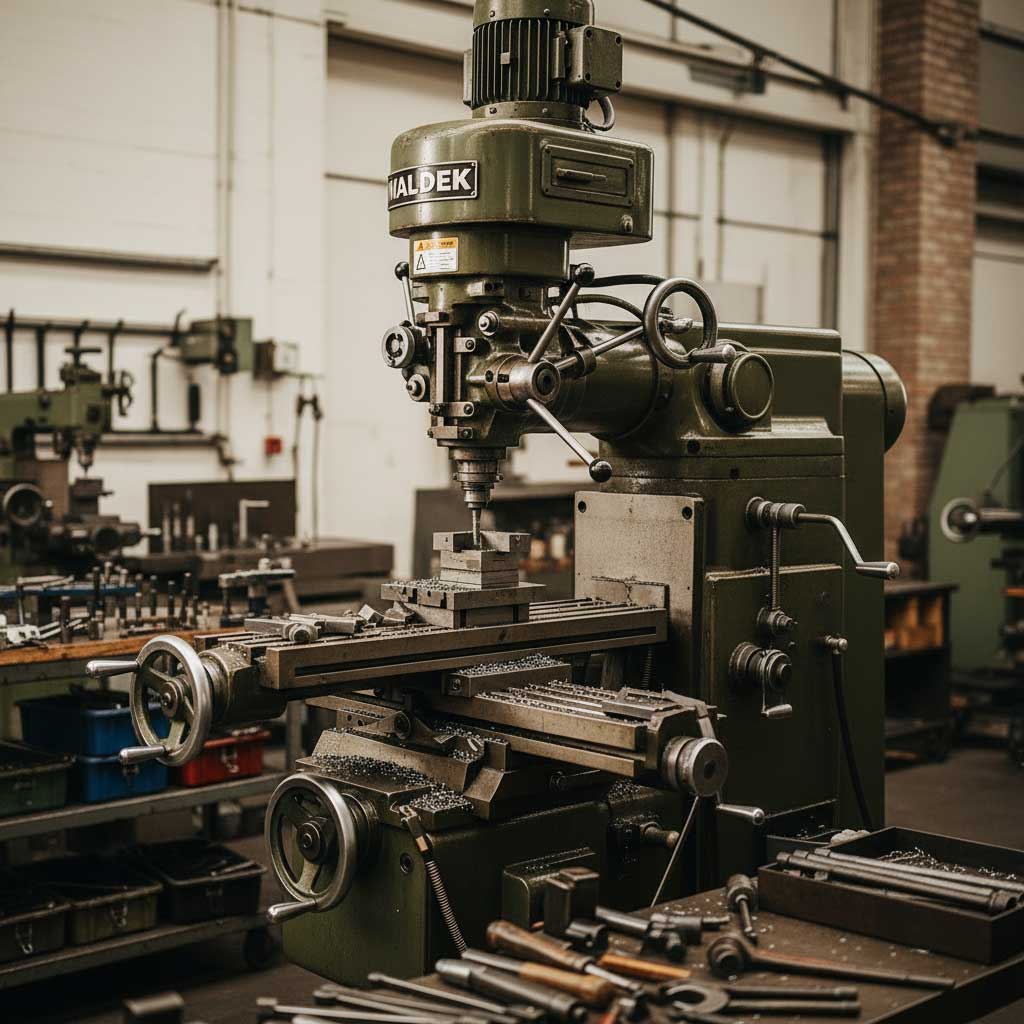
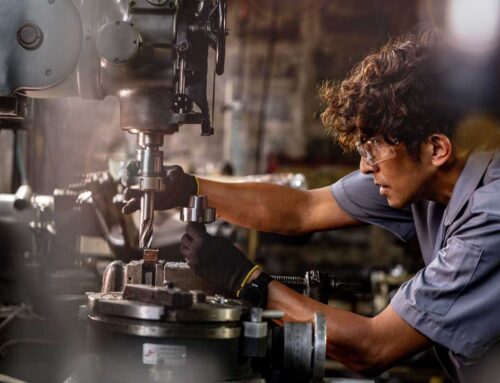
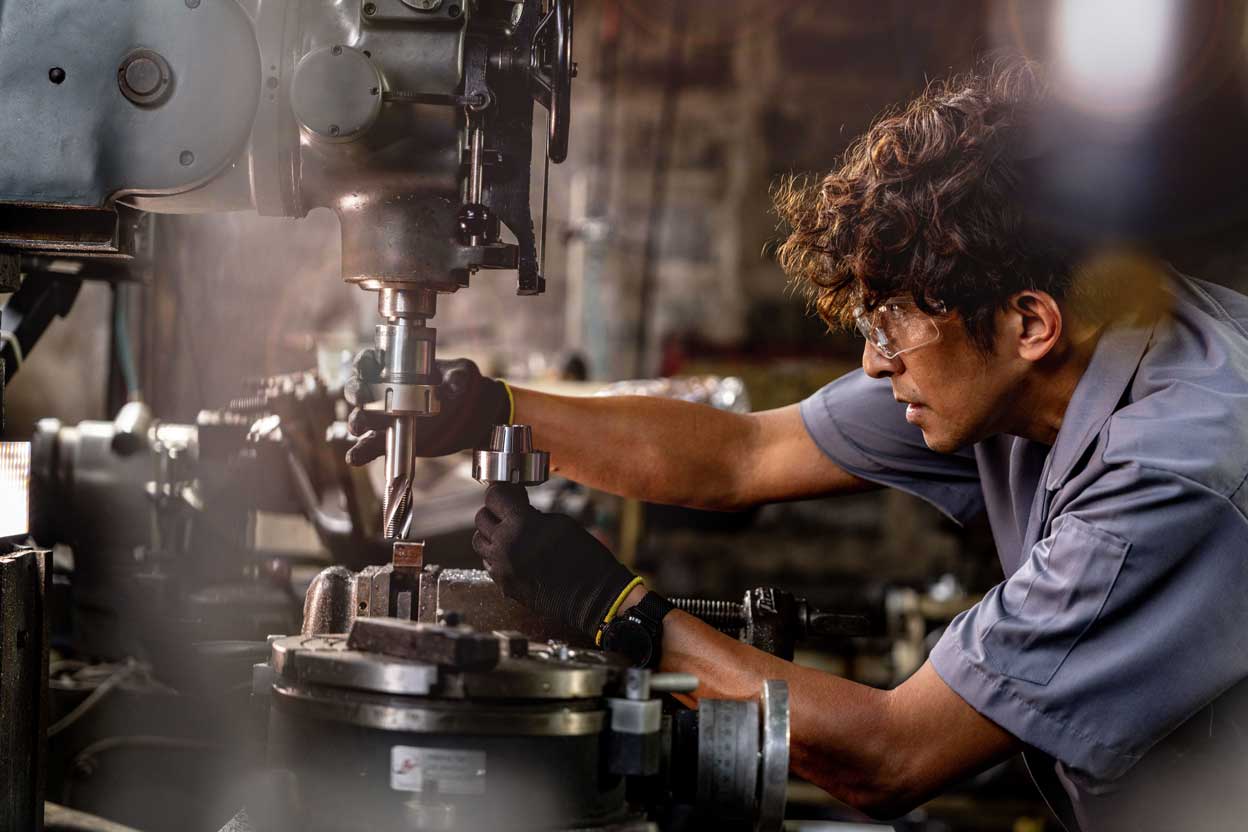
Conventional machines (manual lathes and mills) rely primarily on the machinist’s skill and experience. They provide excellent flexibility for certain types of work.
SINGLE PARTS OR URGENT REPAIRS
For a single part, a repair or a quick modification, a conventional machine is often the best option because no CNC programming is required, startup is immediate and adjustments can be made in real time.
It is ideal for replacement parts, repairing shafts, bushings, axles and adjustments on existing equipment.
STANDARD TOLERANCES AND SIMPLE GEOMETRIES
When tolerances are reasonable and shapes are simple (bores, flat surfaces, simple diameters and lengths), conventional machining offers an excellent time-to-cost ratio without unnecessary complexity.
FINE ADJUSTMENTS AND EXPERIENCE-BASED WORK
Some operations require progressive corrections, constant control or precise adjustments based on experience.
Conventional machining allows the machinist to feel the cut, adjust instantly and achieve the optimal result.
LOWER COSTS FOR SMALL QUANTITIES
For very small quantities (1 to 3 parts), conventional machining avoids programming costs and longer setup times.
It becomes a simple, fast and economical solution.
WHEN TO USE A CNC MACHINE
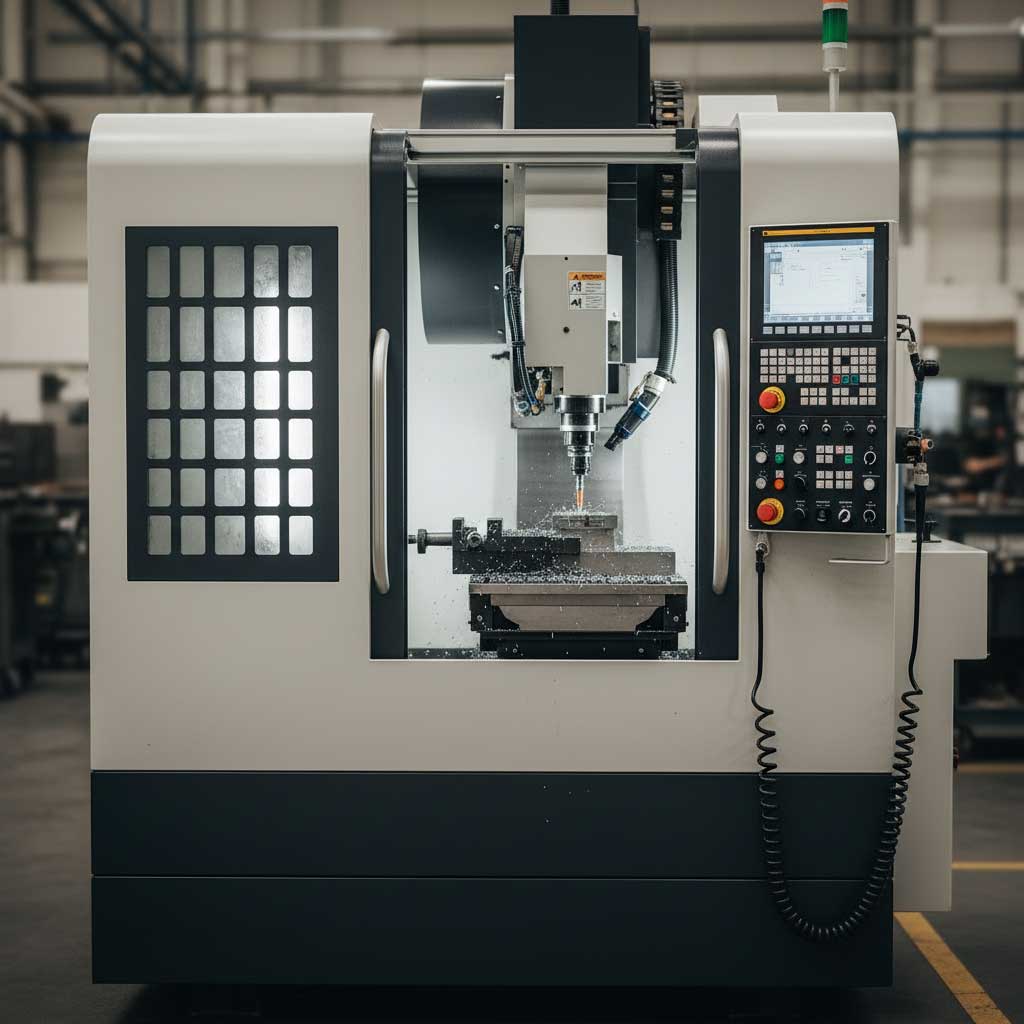
SMALL TO MEDIUM PRODUCTION RUNS
Once production volumes increase (5, 10, 50 parts or more) and exact dimensional repeatability is required, CNC becomes far more efficient thanks to a single program and stable, consistent production.
COMPLEX PARTS
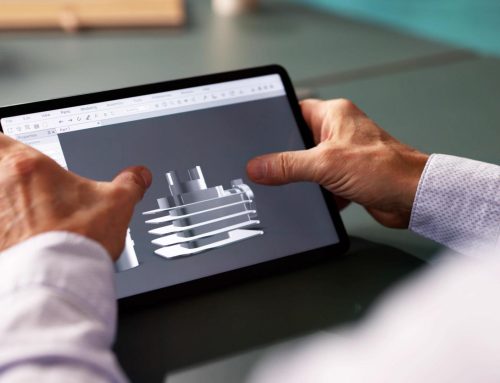
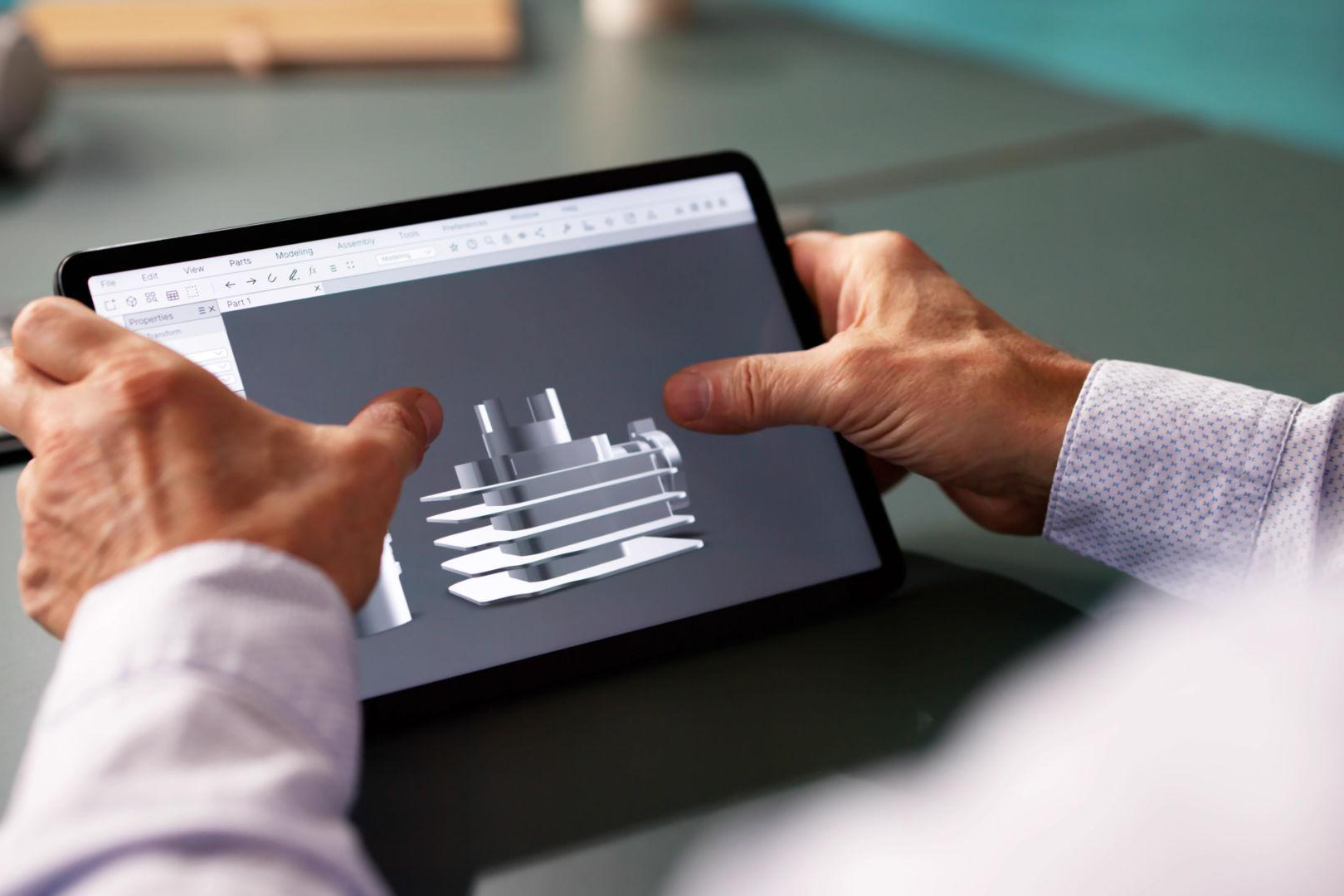
Parts with multiple pockets, complex geometries, repeated drilling patterns or combined machining operations are much more efficient to produce on CNC machines, often in a single setup.
TIGHT TOLERANCES AND REPEATABILITY
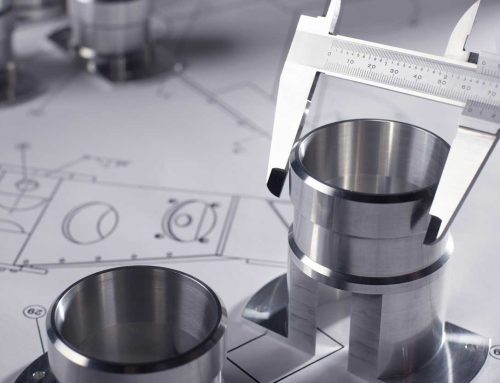
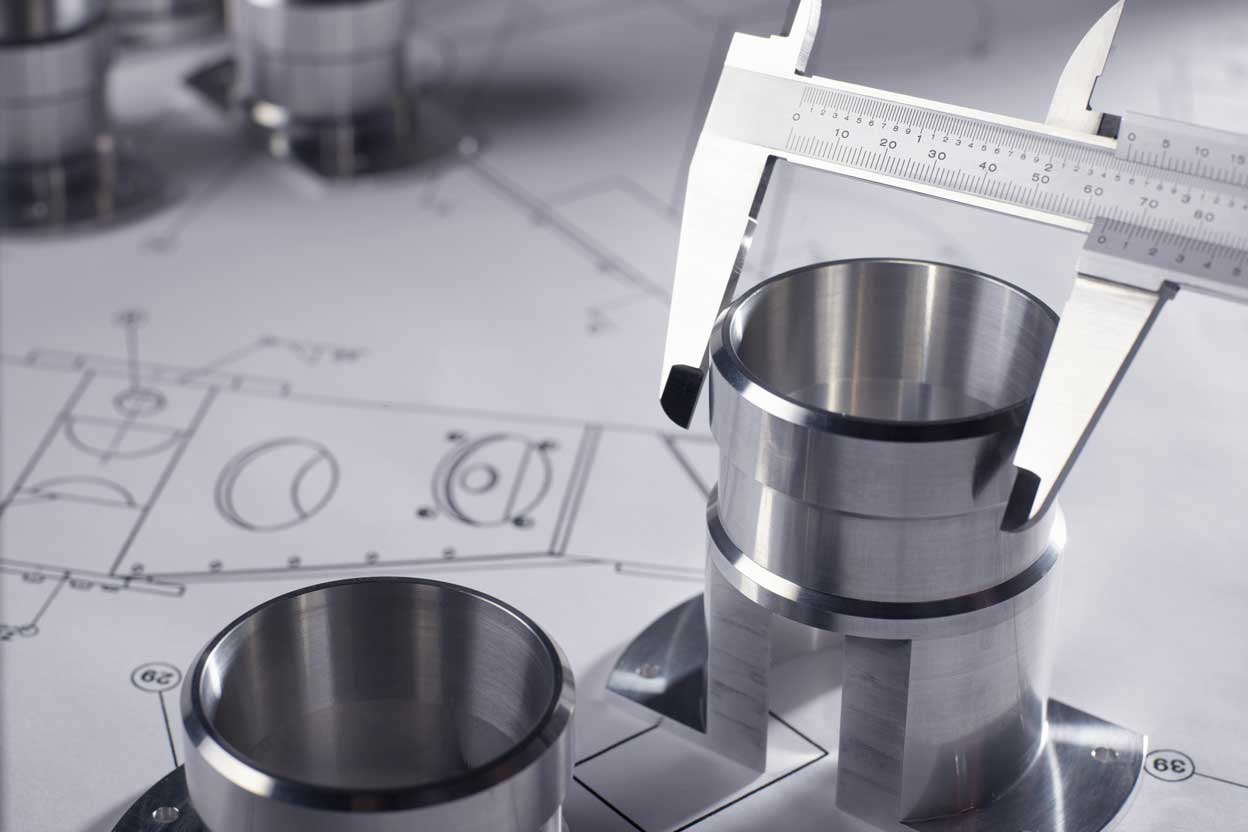
CNC machining is ideal for tight tolerances, strict dimensional requirements and consistent results from part to part. It reduces human variability and ensures repeatable quality.
OPTIMIZING LEAD TIMES AND LONG-TERM COSTS
Once programmed, CNC machines allow optimized cycles, less rework, reduced handling and improved planning.
Lead times become more predictable and unit costs decrease over time.
CNC AND CONVENTIONAL MACHINING: COMPLEMENTARY TECHNOLOGIES
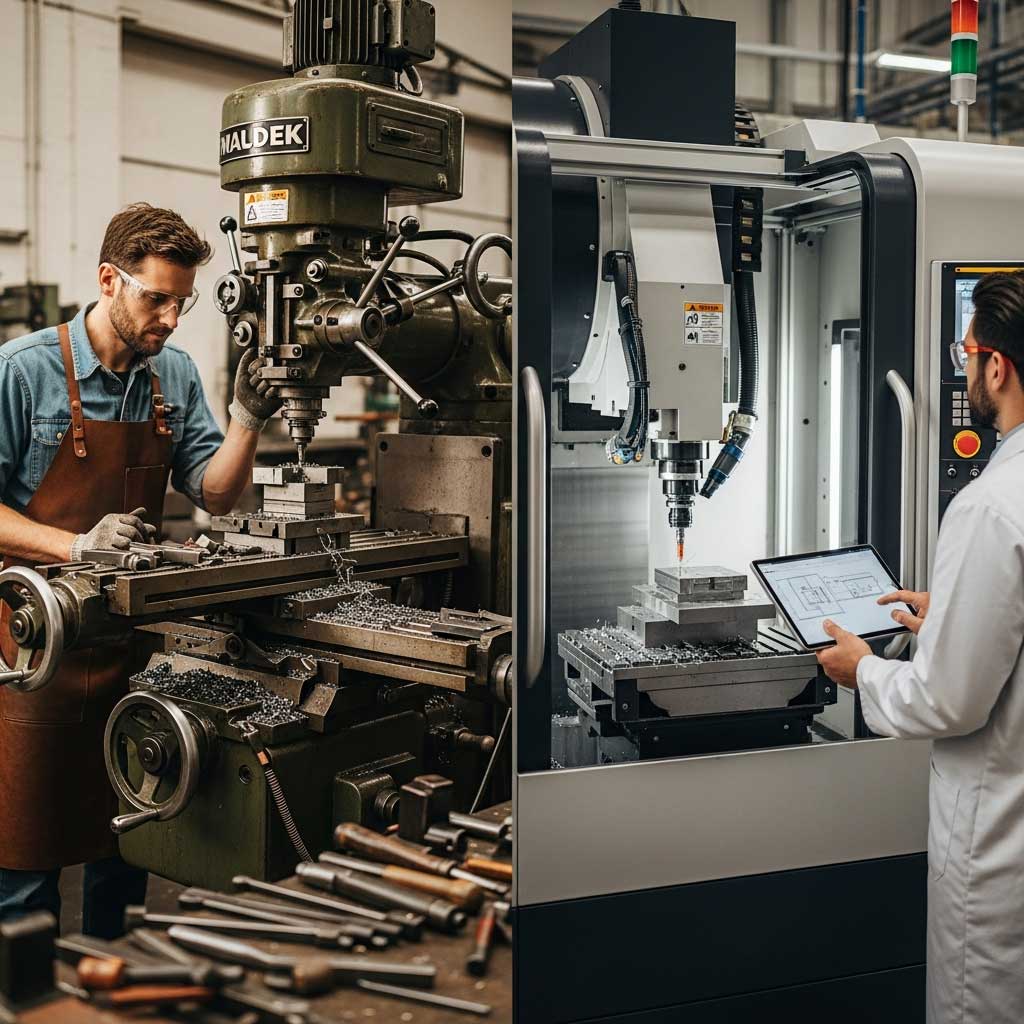
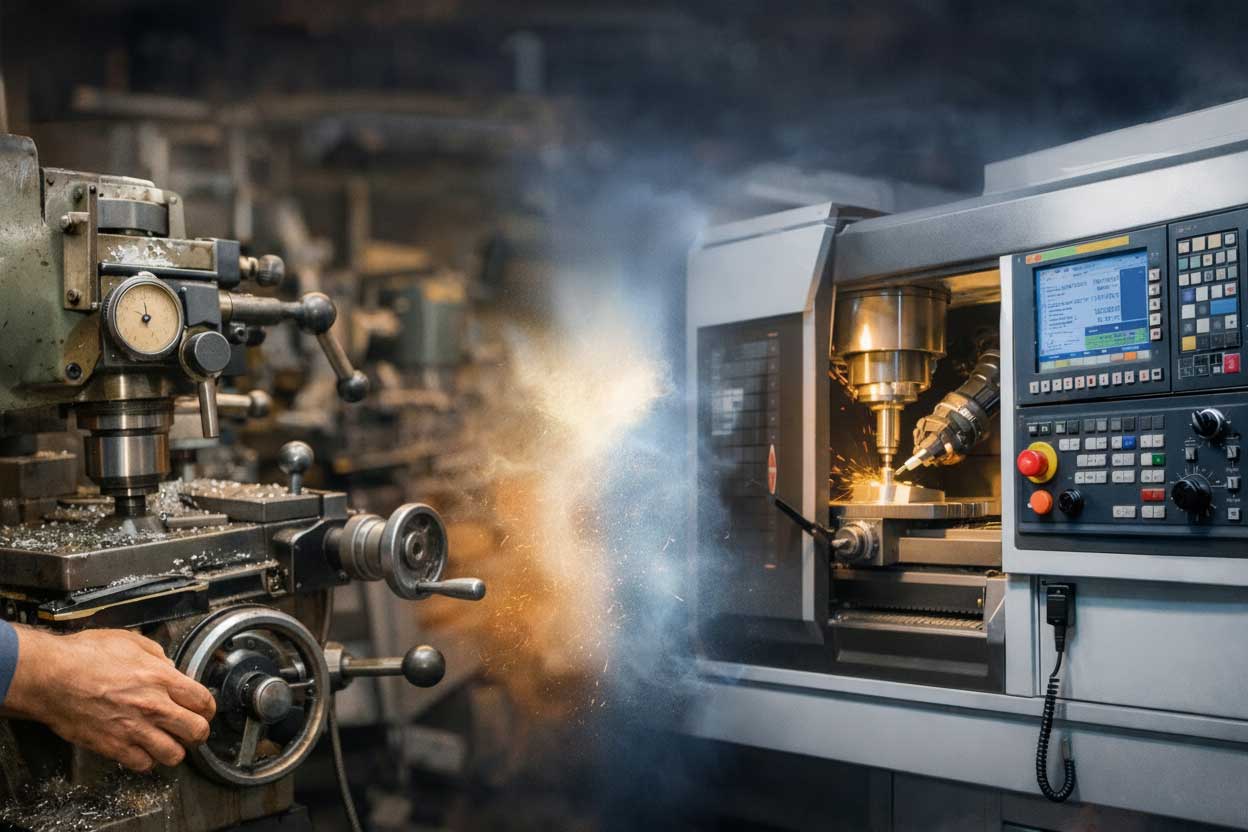
A hybrid machine shop combines the strengths of both conventional and CNC machines.
It provides greater flexibility, shorter lead times and optimized costs by selecting the most appropriate technology for each project.
At Précifab, this hybrid approach is strategic: conventional machines are used for repairs, adjustments and one-off parts, while CNC machines ensure precision, repeatability and production efficiency.
The right choice always depends on the type of part, production volume, tolerances, deadlines and budget. For industrial clients, this ensures an efficient, precise solution perfectly aligned with their needs.
CONCLUSION: CHOOSING THE RIGHT MACHINE, NOT THE MOST SOPHISTICATED
The best machining is not performed on the most advanced machine, but on the one that best fits the real need, optimized for cost and lead time and executed with precision and expertise.
That is why an experienced machine shop always begins by analyzing the requirement before choosing the most appropriate technology.